Homeowner guide · 7 min read
Why does my basement drain back up when I flush the toilet?
When flushing a toilet changes what happens at a basement drain, the connection is worth reporting. It is a symptom pattern—not a diagnosis.
Read the guide Sewer Backup RepairLinden, New Jersey
A backed-up sewer is stressful. Start with a clear understanding of the problem—and the options for getting drainage moving again.
Sewage at a basement drain, toilet or shower can point to a main-line problem. Clearing, camera inspection and pipe repair address different causes.
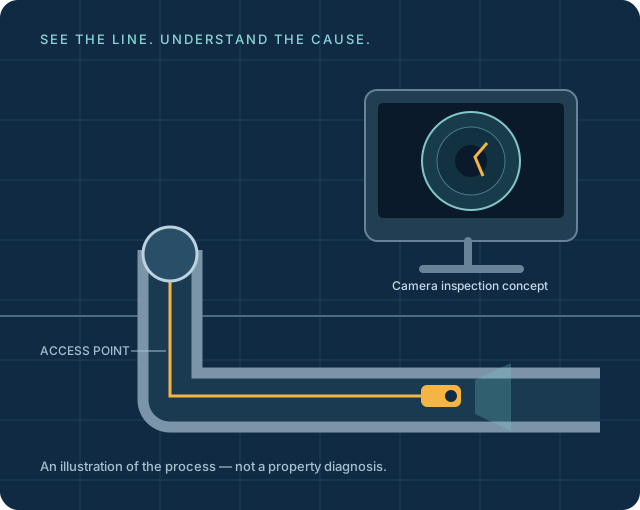
Illustrative inspection diagram; not a photograph of completed work.
One slow drain and several backing-up fixtures can tell different stories. Note what happens and where it happens; these details help guide an assessment without replacing an inspection.
A toilet, shower and floor drain backing up together may share a downstream restriction.
Water appearing at a lower fixture when a toilet flushes is a useful symptom to report.
A short-lived improvement after clearing may call for a closer look at the cause.
Water may emerge at a basement drain or other low opening when it cannot move downstream.
For contaminated-water precautions, see CDC floodwater safety guidance.
The first visible symptom may be the same, but the solution depends on what is happening inside the line and what has been affected outside it.
Cleaning addresses a clog or buildup restricting the passage of wastewater. The right method depends on access, obstruction and pipe condition. It does not reconstruct a damaged line.
Understand sewer cleaningStructural repair may be needed when cracks, displacement or other damage contribute to the backup. Inspection findings help determine whether a targeted repair or replacement is appropriate.
Explore repair optionsRemoving an obstruction does not sanitize a basement or restore affected materials. Sewage cleanup is a separate scope. Confirm who handles it and what treatment is included.
How cleanup differsUnderstand the purpose and limits of each service before choosing the next step. Specific service availability must be confirmed for your address.
Learn how mechanical clearing and hydro jetting differ, why access matters and when repeated cleaning may be treating a symptom rather than its cause.
Line cleaning guideExplore what inspection footage may show, what can limit visibility and which questions to ask about findings, recordings and recommendations.
Camera inspection guideCompare targeted repairs, replacement and condition-dependent trenchless approaches. Learn why clearing and repairing a line serve different purposes.
Sewer repair guideA useful service discussion connects what you noticed with the evidence and the scope of work. This decision guide helps you prepare; it does not promise a specific appointment process.
Explain which fixtures are affected, when the problem began and whether the line has been cleared before.
Access, blockage location and pipe condition help determine the suitable inspection or clearing method.
Ask what the recommendation addresses, what evidence supports it and which costs are included.
Agree on the work offered, exclusions and next steps, including any separate cleanup or restoration.
Accumulated material, roots, damaged piping or a downstream system issue may restrict flow. Similar symptoms can come from different causes. A property-specific assessment helps distinguish an isolated obstruction from a problem likely to recur.
Keep a record of earlier clearing, repairs and inspection footage if available. This history can be useful when evaluating repeated backups, particularly when drainage improves briefly and then slows again.
Why a backup can returnThis website focuses on Linden, New Jersey, including ZIP 07036. Homeowners, landlords and property managers can use these guides to prepare for a service discussion and understand the difference between restoring drainage and addressing a damaged line.
Availability, access requirements and the work offered must be confirmed for each property. No walk-in office or wider service area is represented here.
Linden service-area informationHave your ZIP, affected fixtures and a short description of the problem ready when a contact channel becomes available.
View contact statusNo. An obstruction may be cleared without replacement. Repair decisions depend on the pipe condition, the cause of the restriction and the history of the problem.
Connected fixtures may share a restriction farther downstream. The pattern is useful information for an assessment, but it does not identify the exact location or cause.
Cleaning removes an obstruction or buildup. Repair addresses damaged, displaced or otherwise failing piping. Some properties need both steps.
It may reveal roots, cracks, offsets or remaining obstructions. Visibility depends on access, water level and the condition of the line; initial clearing may be needed.
Do not assume so. Clearing a line and treating contaminated property are different tasks. Confirm each scope separately before work begins.
Access, the blockage location, line condition, selected method, repair length and surface restoration can all affect the estimate. Camera work and cleanup may be separate items.
Yes. Linden, New Jersey 07036 is the primary area described here. Service availability for a specific address needs confirmation.
Phone service is coming soon. The displayed number is not an active contact channel. Online enquiries are also unavailable until a working contact option is added.
When flushing a toilet changes what happens at a basement drain, the connection is worth reporting. It is a symptom pattern—not a diagnosis.
Read the guideThe words sound similar, but they describe different goals. Understanding the difference can make a service recommendation and estimate easier to assess.
Read the guideIf drainage improves and then backs up again, the important question is what the first clearing addressed—and what may remain unresolved.
Read the guideHave your ZIP, affected fixtures and previous service records ready. Confirm the work offered and availability for your address.